

Why Perfectionism in Kids Is Becoming a Serious Problem
Why Perfectionism in Kids Is Becoming a Serious Problem
Why Perfectionism in Kids Is Becoming a Serious Problem
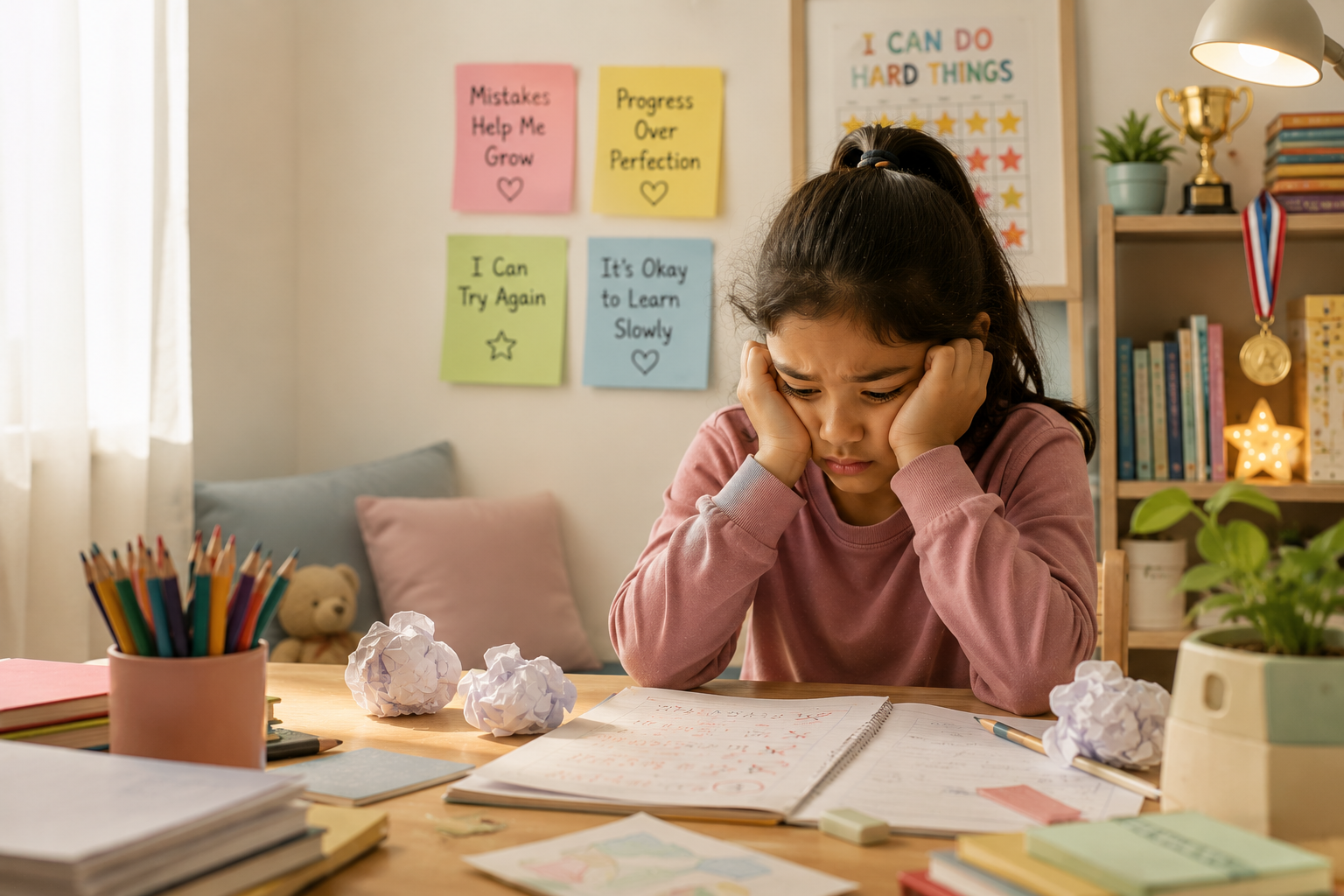
The Kid Who Cries After One Mistake
Many parents have seen this moment.
A child:
- tears up after losing
- panics over tiny mistakes
- refuses to try unless they know they’ll succeed
- melts down when things aren’t perfect
At first it seems like sensitivity.
But underneath, something deeper may be happening.
Perfectionism.
And it’s becoming more common in children than many adults realize.
Perfectionism Is Not the Same as Motivation
Perfectionism often looks impressive at first.
These children may:
- work extremely hard
- behave well
- chase achievement
- avoid mistakes carefully
But internally, many perfectionistic kids are carrying constant fear.
Fear of:
- failure
- embarrassment
- disappointing adults
- not being good enough
That fear slowly damages confidence.
Because confidence requires the ability to survive mistakes.
Why Kids Feel Pressure Earlier Now
Children today are exposed to constant comparison.
They see:
- curated lives online
- highly competitive environments
- constant performance metrics
- pressure to excel early
Even very young children can begin believing:
“If I’m not exceptional, I’m falling behind.”
That mindset creates anxiety quickly.
The Dangerous Belief Beneath Perfectionism
Many perfectionistic children secretly believe:
“If I make mistakes, people will think less of me.”
That belief creates emotional fragility.
Children become terrified of:
- trying new things
- looking silly
- failing publicly
- taking creative risks
Over time, some kids stop challenging themselves entirely.
Not because they lack ability.
But because protecting their image feels safer.
What Actually Helps Kids Escape Perfectionism
Children need repeated experiences showing them:
- mistakes are normal
- growth takes time
- embarrassment is survivable
- effort matters more than perfection
Parents can help by:
- talking openly about their own mistakes
- praising persistence
- reducing comparison
- allowing imperfect outcomes
- celebrating progress
Children need environments where they feel safe being human.
Why Confidence Matters More Than Perfection
Perfection creates pressure.
Confidence creates resilience.
A confident child understands:
“I can fail without losing my value.”
That belief protects mental health far more effectively than constant achievement ever will.
And in today’s world, children need that foundation more than ever.
Because the strongest kids are not the ones who never fail.
They are the ones who keep growing after they do.