

Why Storytelling Is One of the Most Powerful Ways to Build Emotional Resilience in Kids
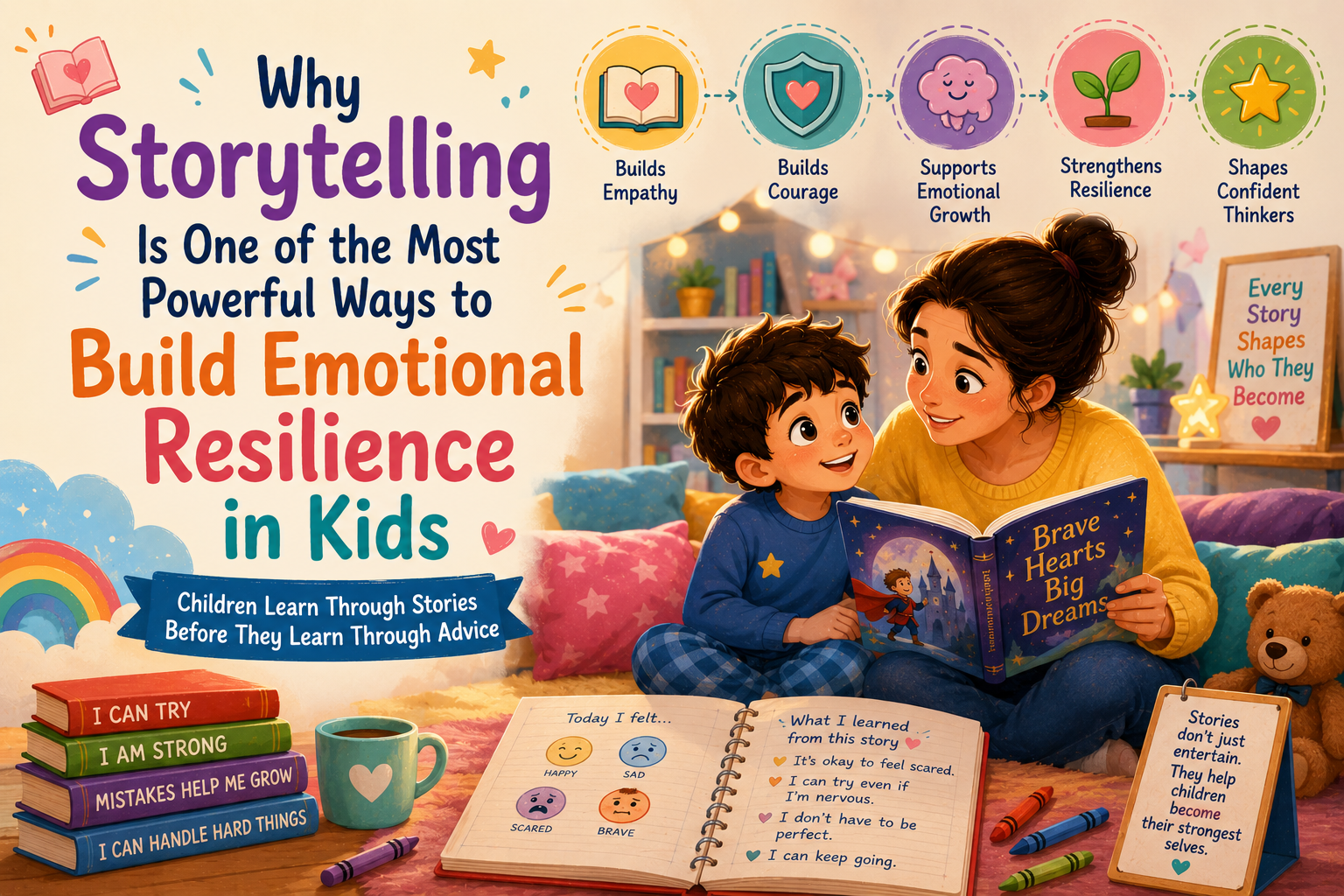
Why Storytelling Is One of the Most Powerful Ways to Build Emotional Resilience in Kids
Why Storytelling Is One of the Most Powerful Ways to Build Emotional Resilience in Kids
Children Learn Through Stories Before They Learn Through Advice
Most adults try to teach children with instructions.
But children learn differently.
A child may ignore a lecture about bravery.
Yet the same child will sit completely still listening to a story about a frightened character who discovers courage.
Why?
Because stories bypass resistance.
They allow children to feel lessons instead of simply hearing them.
Stories Help Children Practice Emotions Safely
Stories give children emotional rehearsal.
Inside a story, kids experience:
- fear
- embarrassment
- failure
- uncertainty
- courage
- perseverance
All without real-world consequences.
That emotional practice matters.
Because resilience is not built through information.
It’s built through experience.
Stories simulate emotional experiences in ways children deeply understand.
Kids See Themselves Inside Characters
Children naturally identify with fictional characters.
Especially characters who:
- feel insecure
- make mistakes
- doubt themselves
- struggle socially
- feel different
When children watch those characters grow, they quietly imagine:
“Maybe I can grow too.”
That shift is powerful.
It changes identity.
Why Magical Stories Work Especially Well
Fantasy stories create emotional distance.
Sometimes children can accept difficult truths more easily when they happen to:
- wizards
- creatures
- adventurers
- magical heroes
Instead of feeling judged, children feel curious.
Fantasy also expands imagination.
And imagination is deeply connected to confidence.
A child who can imagine courage becomes more capable of practicing it.
Emotional Resilience Starts Earlier Than Most Parents Think
Many adults assume resilience develops naturally over time.
But early childhood experiences shape emotional patterns deeply.
Children begin forming beliefs such as:
- “I can handle hard things.”
- “Mistakes are survivable.”
- “Being imperfect is okay.”
- “I can try again.”
Those beliefs often become lifelong foundations.
Stories can help strengthen those beliefs in gentle but lasting ways.
Stories Don’t Replace Parenting — They Reinforce It
No story replaces real parenting.
But stories can reinforce the lessons parents hope children internalize.
Sometimes children hear things differently from characters than from adults.
And sometimes one meaningful story stays with a child for years.
That’s the hidden power of storytelling.
It doesn’t just entertain children.
It helps shape how they see themselves.