

The Hidden Ways Parents Accidentally Lower Their Child’s Confidence
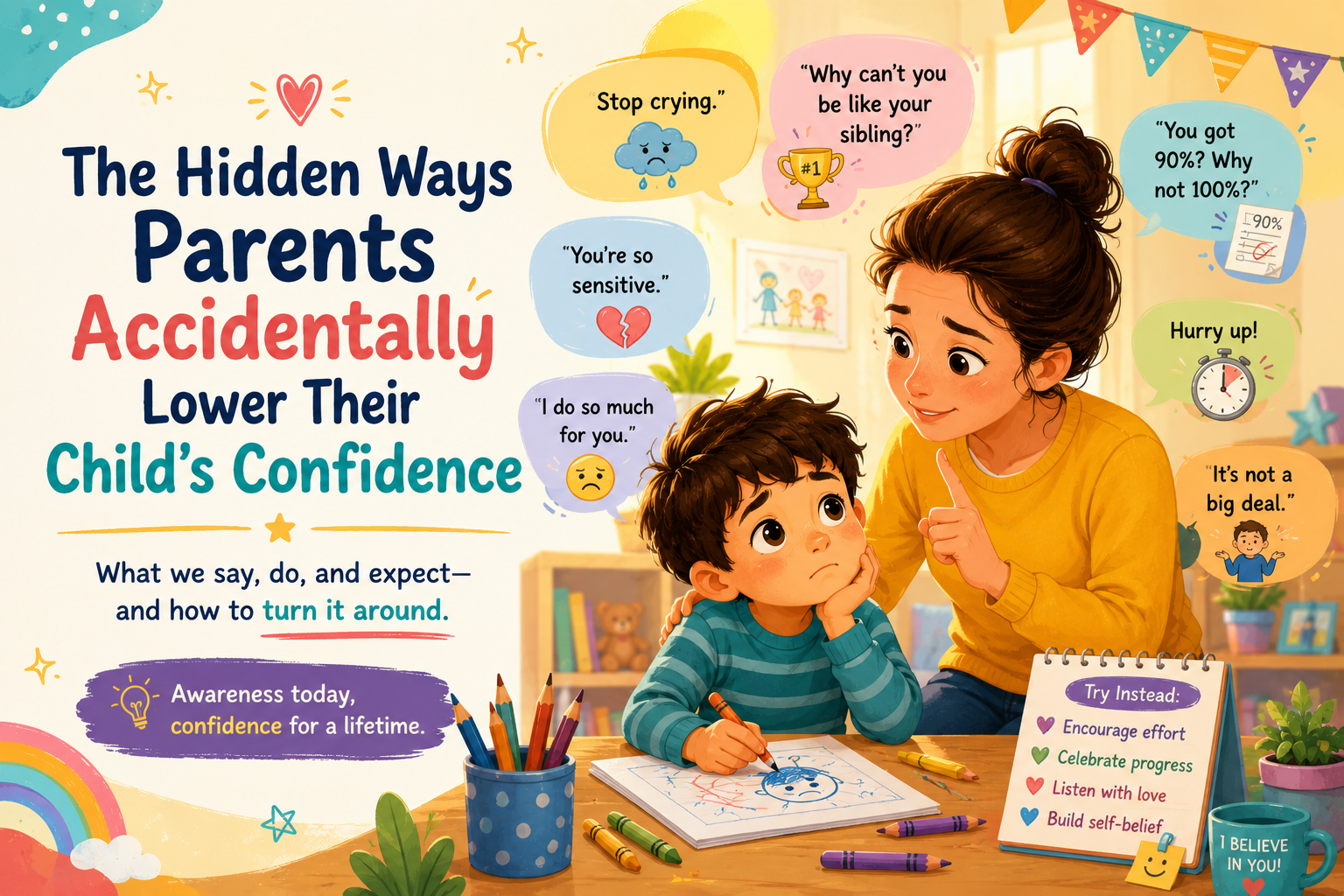
The Hidden Ways Parents Accidentally Lower Their Child’s Confidence
The Hidden Ways Parents Accidentally Lower Their Child’s Confidence
Most Parents Don’t Realize They’re Doing This
No parent wakes up thinking:
“Today I’m going to lower my child’s confidence.”
In fact, most confidence-damaging behaviors come from love.
Parents want to:
- protect their children
- prepare them
- help them succeed
- prevent pain
But sometimes the very things meant to help children can quietly teach them:
“I’m not capable on my own.”
And children absorb those messages faster than adults realize.
1. Correcting Too Quickly
Some children barely finish speaking before adults correct them.
“No, that’s wrong.” “Not like that.” “Do it this way.”
Over time, constant correction creates hesitation.
Children stop trusting themselves.
They begin waiting for approval before trying anything.
This doesn’t mean parents should never guide children.
It means kids need space to:
- think
- attempt
- experiment
- make harmless mistakes
Confidence grows when children feel safe trying.
2. Rescuing Kids From Every Discomfort
Watching children struggle is painful.
But rescuing too quickly sends a dangerous message:
“You can’t handle this.”
Sometimes children need support.
But they also need opportunities to discover:
- resilience
- patience
- problem-solving
- emotional recovery
A child who overcomes small struggles builds emotional strength.
A child constantly rescued may become afraid of discomfort itself.
3. Comparing Them to Other Kids
Even subtle comparison affects children deeply.
Examples:
- “Your brother does it faster.”
- “Why can’t you focus like her?”
- “Other kids your age can already do this.”
Children rarely hear comparison as motivation.
They hear:
“I’m not enough.”
Comparison often creates shame—not growth.
4. Praising Outcomes More Than Character
When children only receive praise for:
- winning
- grades
- talent
- performance
They start connecting self-worth to achievement.
That becomes dangerous.
Because eventually every child experiences:
- failure
- rejection
- mistakes
- disappointment
Kids need to know they still have value during those moments.
That’s why character-based praise matters.
Praise:
- kindness
- courage
- effort
- honesty
- persistence
Those qualities build lasting confidence.
5. Talking About Themselves Negatively in Front of Kids
Children copy adult self-talk.
When parents constantly say:
- “I look terrible.”
- “I’m such an idiot.”
- “I always mess things up.”
kids absorb that pattern.
They learn self-criticism by watching adults.
And eventually they begin speaking to themselves the same way.
Confidence Is Built Through Safety
Children become confident when they feel:
- emotionally safe
- accepted during failure
- capable of growth
- trusted
- loved beyond performance
That doesn’t mean avoiding standards.
It means building children up without making perfection the price of worthiness.
The Good News
Confidence is not fixed.
Children can rebuild self-belief surprisingly quickly when adults:
- listen more
- compare less
- encourage effort
- allow struggle
- celebrate growth
Small changes repeated consistently can reshape how children see themselves.
And that changes everything.