

Why Kids Are Struggling With Anxiety More Than Ever
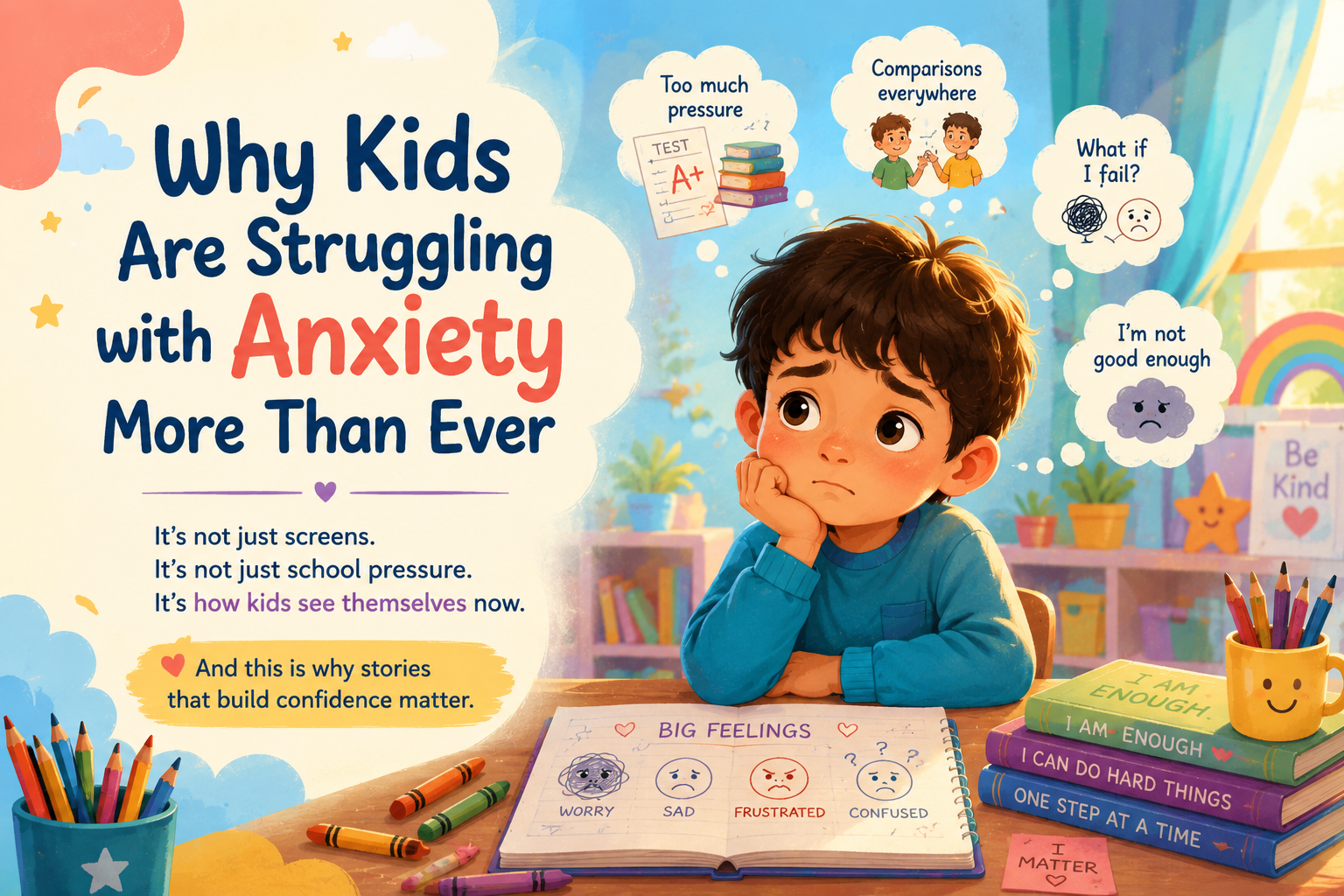
Why Kids Are Struggling With Anxiety More Than Ever
Why Kids Are Struggling With Anxiety More Than Ever
It’s Not Just Screens. It’s Not Just School.
Something is changing in childhood.
Parents can feel it.
More kids are:
- overwhelmed easily
- afraid to fail
- emotionally exhausted
- socially nervous
- deeply self-critical at younger ages
Even children who seem “fine” on the outside are carrying pressures many adults didn’t experience growing up.
And while screens and school pressure absolutely play a role, they are not the full story.
The deeper issue is this:
Many children are growing up constantly evaluating themselves.
Am I good enough? Am I behind? Am I weird? Do people like me? What if I fail?
That internal pressure changes how children experience the world.
Childhood Has Become Performance-Based
Children today are observed constantly.
At school. At sports. Online. In photos. On video. Even during play.
Many kids feel like they are always being judged.
And when childhood becomes performance-based, anxiety grows naturally.
Because children stop feeling safe to:
- be messy
- make mistakes
- look silly
- fail publicly
- learn slowly
Instead, they become focused on avoiding embarrassment.
That fear can quietly shape their personality.
The Rise of “Perfect Kid Pressure”
Modern parenting often comes from love.
But sometimes love accidentally creates pressure.
Children absorb things parents never intend.
They notice:
- disappointment
- stress
- comparison
- frustration
- constant correction
Many kids start believing:
“If I do everything right, I’ll feel secure.”
But perfection is impossible.
And children who chase perfection often become deeply anxious.
Why Emotional Resilience Is Declining
Children need opportunities to:
- solve problems
- recover from mistakes
- experience boredom
- handle discomfort
- build emotional stamina
But modern life often removes those moments.
Adults step in quickly. Schedules are packed. Entertainment is instant. Discomfort is avoided.
The result?
Children sometimes grow older without building confidence in their own ability to handle hard feelings.
And anxiety grows when children don’t trust themselves.
Stories Matter More Than Parents Realize
Children learn emotionally before they learn intellectually.
That’s why stories are so powerful.
A story can help a child:
- feel brave
- feel understood
- see failure differently
- recognize resilience
- imagine themselves stronger
Stories create emotional rehearsal.
They allow children to experience fear and courage safely.
That matters deeply in today’s world.
Because children do not only need entertainment.
They need stories that remind them:
“You are capable, even when you feel uncertain.”
Anxiety Is Not Always Loud
Some anxious children are obvious.
Others become:
- perfectionists
- people pleasers
- overly quiet
- emotionally avoidant
- terrified of mistakes
That’s why confidence-building matters so much.
Not because children need to become fearless.
But because they need to trust themselves enough to face life without collapsing every time something feels uncomfortable.
And that kind of resilience can begin very early.
Sometimes with conversations. Sometimes with small experiences.
And sometimes with stories that quietly change how children see themselves.